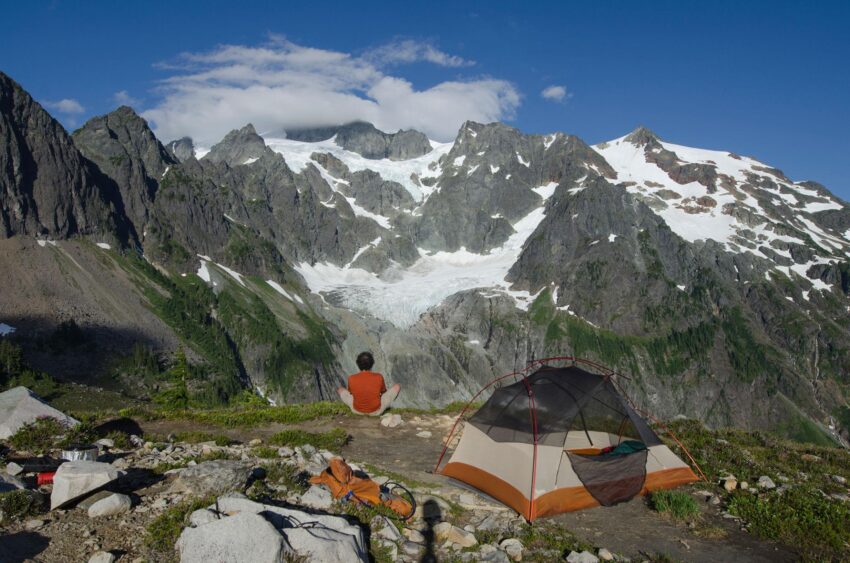


Seattle is surrounded by an incredible variety of outdoor landscapes. Within a few hours of the city, hikers can move from mossy evergreen forests to alpine meadows, glacier-covered mountains, rugged coastlines, and peaceful lakes. Whether you are planning a short weekend hike, a family camping trip, or a more ambitious backpacking adventure, the region offers plenty of opportunities to sleep beneath the trees and spend the day exploring trails.
From nearby state parks to major national parks, here are some of the places worth considering for your next hiking and camping getaway.
1. Mount Rainier National Park
Few outdoor destinations near Seattle are as recognizable as Mount Rainier. The park offers more than 260 miles of maintained hiking trails, ranging from short nature walks to challenging mountain routes. Forests, waterfalls, subalpine meadows, glaciers, and dramatic mountain viewpoints create an impressive variety of scenery.
The Paradise area is particularly popular for hiking. Routes such as the Skyline Trail and Nisqually Vista Trail provide opportunities to experience high-country scenery without committing to a multi-day backpacking trip. The park also has extensive wilderness opportunities for experienced hikers.
Camping can turn a day trip into a longer adventure. As of September 2026, Cougar Rock Campground is open, while White River Campground is open into early October, weather permitting. Ohanapecosh Campground is closed for the 2026 season because of rehabilitation work.
For backpackers, Mount Rainier also offers designated wilderness campsites. Overnight wilderness camping requires a permit, and advance planning is recommended during the busy summer season.
2. North Cascades National Park

If dramatic mountain scenery is your goal, the North Cascades are hard to overlook. North Cascades National Park is less than three hours from Seattle and features jagged peaks, glaciers, alpine valleys, forests, lakes, and numerous hiking routes.
The hiking possibilities range from accessible walks to steep mountain adventures. Popular destinations around the park and surrounding wilderness areas can provide views of rugged peaks and high-elevation landscapes. The most common hiking season generally runs from spring into fall, although higher trails can remain snow-covered well into summer.
Camping is another major attraction. Campgrounds include Newhalem Creek, Gorge Lake, Goodell Creek, and Colonial Creek, with options ranging from forested campsites to locations near lakes and rivers. Backcountry and boat-in camping are also available in designated areas.
Because mountain weather can change rapidly, hikers should check road, trail, and campground conditions before leaving Seattle.
3. Olympic National Park
For an entirely different experience, head across Puget Sound toward Olympic National Park. The enormous park combines mountains, temperate rain forests, lakes, and Pacific coastline, making it one of the most diverse outdoor destinations in the region.
The Hoh Rain Forest is one of the park’s best-known destinations. Trails such as the Hall of Mosses and Spruce Nature Trail allow visitors to walk among enormous trees, moss-covered branches, and lush vegetation. Hurricane Ridge offers mountain scenery, while Lake Crescent provides opportunities for lakeside exploration and nearby hikes.
The coast adds another dimension to the adventure. Rialto Beach, Ruby Beach, and other coastal destinations feature sea stacks, forests, beaches, and dramatic Pacific scenery.
Olympic is large, so visitors should avoid trying to cover the entire park in one short outing. Instead, choose one region and build a hiking or camping itinerary around it. The National Park Service notes that seeing the mountains, rain forest, and coast can require considerable driving time.
4. Mount Pilchuck and the Mountain Loop Area
For hikers looking for a rewarding mountain outing closer to Seattle, Mount Pilchuck is an appealing choice. Washington State Parks describes the Mount Pilchuck hike as a steep climb with dramatic North Cascades views and a historic fire lookout near the summit. The trail climbs roughly 2,300 feet over 2.7 miles, making it a more demanding outing than a casual forest walk.
The scenery changes as you climb, with forest giving way to more open mountain terrain. On clear days, views can stretch toward the North Cascades, Mount Rainier, the Olympic Mountains, and Puget Sound.
Because mountain conditions can change quickly, hikers should research current trail conditions and weather before setting out. A warm, sunny morning in Seattle does not necessarily mean identical conditions at higher elevations.
5. Squak Mountain State Park
You do not always need to travel deep into the mountains for a worthwhile hike. Squak Mountain State Park is much closer to the Seattle metropolitan area and provides a convenient forest escape.
According to Washington State Parks, Squak Mountain has approximately 13 miles of winding trails suitable for hiking, running, and horseback riding.
The dense forest makes the park especially appealing when you want a quieter natural setting without planning a major expedition. It can work well for a half-day outing, particularly for people who want to combine hiking with other activities around the Seattle area.
While Squak Mountain is more of a hiking destination than a traditional camping centerpiece, it can easily be incorporated into a broader Washington outdoor itinerary.
6. Deception Pass State Park


For a combination of hiking, camping, forests, beaches, and water views, consider Deception Pass State Park. Washington State Parks says the park has 38 miles of trails that travel through forests and sand dunes, along rocky saltwater headlands, and beside freshwater lakes.
This variety makes Deception Pass a good option for groups with different interests. One person might want a longer hike while another prefers exploring the shoreline or relaxing near camp.
The park’s coastal setting also creates opportunities for photography and wildlife observation. Bring layers, however, because conditions around Puget Sound can be breezy and cool even when the weather is comfortable inland.
7. Nearby State Parks for Easier Getaways
Not every outdoor adventure needs to be an ambitious mountain expedition. Washington has more than 140 state parks, historic sites, trails, marine parks, and related properties, giving Seattle-area travelers numerous options for shorter trips.
State parks can be especially convenient for beginners or families who want to combine hiking with established camping facilities. Depending on the park, overnight accommodations may include basic campsites, yurts, platform tents, cabins, or full-hookup sites.
Before visiting a state park, check its current rules, reservations, parking requirements, and fire restrictions. Washington State Parks recommends checking alerts and conditions before heading out, particularly during periods of dry weather or wildfire risk.
Planning Your Seattle-Area Hiking and Camping Trip
The best destination depends on the kind of experience you want. For iconic mountain scenery, Mount Rainier is an obvious destination. North Cascades offers rugged alpine landscapes and extensive camping opportunities. Olympic National Park is ideal for combining forests, mountains, lakes, and coastline. Meanwhile, places such as Squak Mountain and Deception Pass can provide rewarding outdoor experiences without requiring a long backcountry expedition.
Before leaving Seattle, check the latest trail and road conditions. Bring the Ten Essentials, adequate water, weather-appropriate layers, navigation tools, food, and emergency supplies. The National Park Service recommends being prepared for changing weather and carrying essential safety equipment on Olympic National Park hikes.
Camping also requires some advance preparation. Confirm whether your destination requires reservations, permits, passes, or a wilderness permit. For national parks, check official park alerts because seasonal closures, fires, weather, construction, and road conditions can change access to specific trails and campgrounds.
Finally, remember that the goal of a hiking and camping trip is not simply reaching a viewpoint. Take time to appreciate the forests, mountain air, rivers, wildlife, and changing landscapes that make the Pacific Northwest special. With thoughtful planning, Seattle can serve as an excellent starting point for everything from an easy afternoon walk to a memorable multi-day wilderness adventure.
This content is generated by ChatGPT